Dealing with Pregnancy Loss, Infertility, and Other Postpartum Grief


The grief that surrounds pregnancy, infertility, and loss can be all-consuming. It can be filled with intrusive thoughts, numbness, and yearning for a life you have dreamed of. A lot of people say it feels as though they are drowning. Because grief is such a complicated, messy, and deeply personal process, it can be challenging to put a specific definition on it. Ultimately, how you describe your grief experience is what matters.
Given that the experience of grief and loss is not something you typically prepare for, it often takes parents by surprise. For example, Mariah was thrilled when she first learned that she was pregnant. When time came to attend her eight-week appointment, she and her boyfriend were excited to see their little bean on the screen for the first time. As she laid back on the table and felt the cool gel on her belly, she knew this was going to be a life-changing moment. Unfortunately, the experience was life-changing, but not in the way that she had hoped. The ultrasound technician was unable to find a heartbeat, and it was then that Mariah learned she was having a miscarriage. The waves of grief took her by surprise. She hadn’t even considered that she could lose this baby and hadn’t heard of anyone in her life who had experienced this loss before. How was she supposed to feel? What was she supposed to do? The next few weeks were filled with tears and uncertainty about the future. While she knew that she wanted to try to conceive again one day, she wanted more time to grieve and process what happened.
When navigating grief related to loss or infertility, there are many possible ways that people process the experience. Some individuals may feel like they are unable to process or speak about their grief because they don’t feel like others will view their loss as a “real” loss. For others, the grief may affect their family planning goals or create feelings of self-doubt during subsequent pregnancies.
If you have experienced grief and loss while trying to conceive, know that there is no right way to manage the complicated emotions that come from these difficult journeys. Allow yourself the time and space to heal in a way that feels right to you. If you feel comfortable, consider the following reflection questions to help you navigate your grief journey. If it feels triggering or difficult, please feel free to skip over the questions.
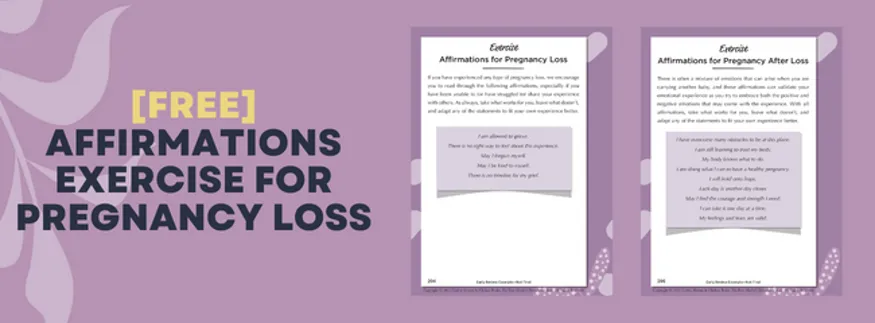
Affirmations are also a great way to shift your inner dialogue and create a sense of connection and kindness within yourself. If you are currently going through grief surrounding infertility, loss, or any facet of pregnancy, be gentle with yourself and know that there is no right way to feel. But in order to acknowledge the current struggles you are facing, validate the emotions you are having—whatever they may be. Use these free affirmation exercises to provide yourself with some self-compassion.
And if someone you know is going through perinatal grief—whether it’s related to difficulties trying to conceive, pregnancy complications, or a loss of any kind—there are several things you can do to support them:
Given that the experience of grief and loss is not something you typically prepare for, it often takes parents by surprise. For example, Mariah was thrilled when she first learned that she was pregnant. When time came to attend her eight-week appointment, she and her boyfriend were excited to see their little bean on the screen for the first time. As she laid back on the table and felt the cool gel on her belly, she knew this was going to be a life-changing moment. Unfortunately, the experience was life-changing, but not in the way that she had hoped. The ultrasound technician was unable to find a heartbeat, and it was then that Mariah learned she was having a miscarriage. The waves of grief took her by surprise. She hadn’t even considered that she could lose this baby and hadn’t heard of anyone in her life who had experienced this loss before. How was she supposed to feel? What was she supposed to do? The next few weeks were filled with tears and uncertainty about the future. While she knew that she wanted to try to conceive again one day, she wanted more time to grieve and process what happened.
When navigating grief related to loss or infertility, there are many possible ways that people process the experience. Some individuals may feel like they are unable to process or speak about their grief because they don’t feel like others will view their loss as a “real” loss. For others, the grief may affect their family planning goals or create feelings of self-doubt during subsequent pregnancies.
If you have experienced grief and loss while trying to conceive, know that there is no right way to manage the complicated emotions that come from these difficult journeys. Allow yourself the time and space to heal in a way that feels right to you. If you feel comfortable, consider the following reflection questions to help you navigate your grief journey. If it feels triggering or difficult, please feel free to skip over the questions.
- What emotions would you use to describe your grief experience related to infertility, complications, or pregnancy loss?
- What thoughts come up when you reflect on your grief experience?
- Is it hard or easy to put this experience into words?
- Are you allowing yourself to acknowledge the grief you are experiencing? Why or why not?
- How are you telling yourself to handle this experience?
Affirmations are also a great way to shift your inner dialogue and create a sense of connection and kindness within yourself. If you are currently going through grief surrounding infertility, loss, or any facet of pregnancy, be gentle with yourself and know that there is no right way to feel. But in order to acknowledge the current struggles you are facing, validate the emotions you are having—whatever they may be. Use these free affirmation exercises to provide yourself with some self-compassion.
And if someone you know is going through perinatal grief—whether it’s related to difficulties trying to conceive, pregnancy complications, or a loss of any kind—there are several things you can do to support them:
- Focus on doing instead of asking. Sometimes grieving parents don’t know what they need. Instead of asking, take the initiative to do something kind, whether it’s dropping off a meal, helping them care for their other children, offering them rides, or sending them a gift card. However, only offer what is within your ability and comfort level. You don’t need to go above and beyond that.
- Ask them about their loss. Although you might be worried about saying or doing the wrong thing, people often want to share their experience when given the chance. (And if they don’t, they will tell you.) Importantly, listen to their story and allow them to speak without judgment or trying to problem solve in any way. People in the midst of grief just want to be heard and supported. Resist the temptation to offer platitudes, make comparisons to other people’s journey to conceive, or offer them solutions.
- Be patient with their grieving process. Some people take longer than others to go through the grieving process. Allow them the space to do so and continue to check in on them even as time has passed. The grieving process may take time.
Normalize Post-Baby Mental Health Struggles

"But no one told me to expect this..."
So many new moms find themselves saying this phrase in the first hours, days, and weeks postpartum – sometimes even for years! That’s where Instagram’s wildly popular @mamapsychologists come in. In Not Your Mother’s Postpartum Book, Chelsea and Caitlin share what to really expect postpartum – and it’s not just the baby blues.
This refreshingly candid resource fills a notable void by providing real, honest, and raw insights into motherhood.
So many new moms find themselves saying this phrase in the first hours, days, and weeks postpartum – sometimes even for years! That’s where Instagram’s wildly popular @mamapsychologists come in. In Not Your Mother’s Postpartum Book, Chelsea and Caitlin share what to really expect postpartum – and it’s not just the baby blues.
This refreshingly candid resource fills a notable void by providing real, honest, and raw insights into motherhood.
You May Also Be Interested In These Related Blog Posts


